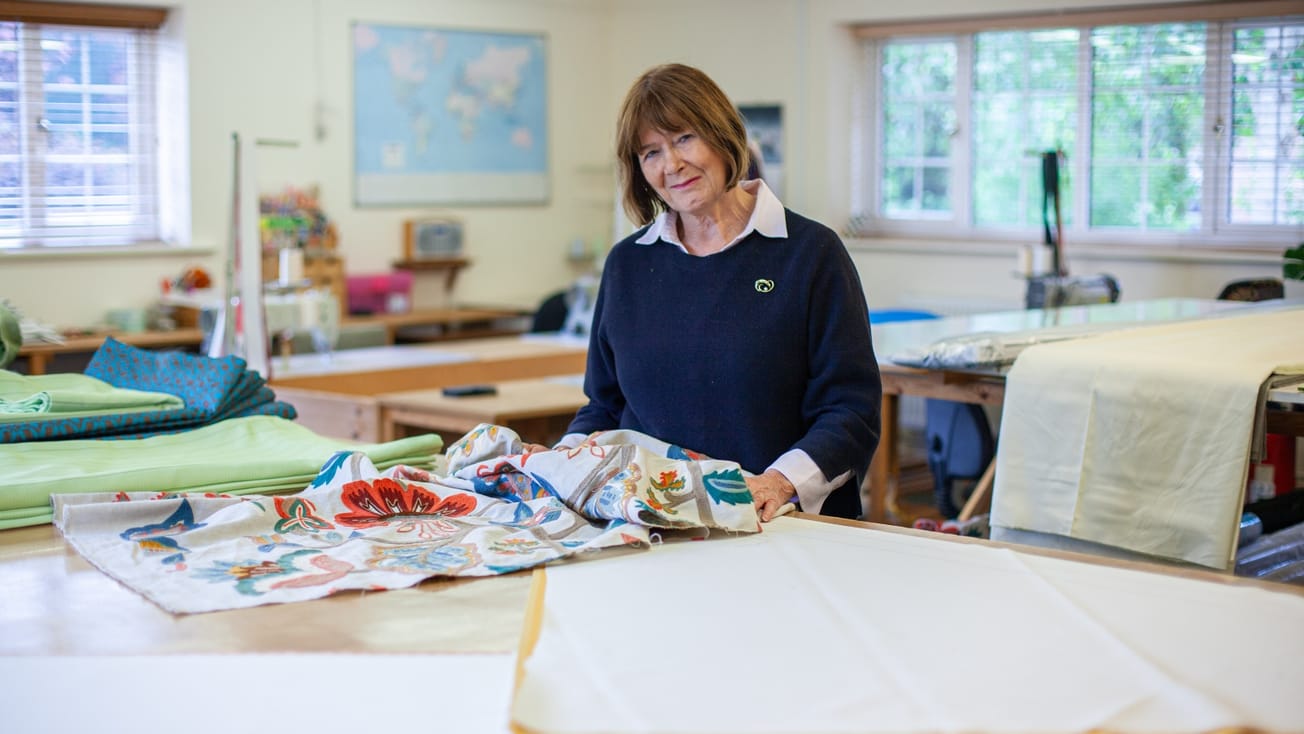
At 76 and a half, Dora McGlone shows no signs of slowing down. From her purpose-built workshop on the bucolic Ash Farm in Hale Barns, she continues to run Artefact Fine Furnishings with the same passion and precision that launched her business 38 years ago from her own cellar.
"I became unemployed from my job as a dental nurse and just thought, okay, what do I do?" Dora remembers of her career pivot at the age of 40.
What she did was transform a personal skill into a thriving business that would eventually employ 10 people and serve clients from country house hotels to some of the finest private residences in the area.
Entirely self-taught except for a brief evening course at South Trafford College, Dora had already honed her skills making bean bags in the 1970s - "four or five hundred of them" - from her home workshop. "You get your skill, you get your speed," she says, describing how domestic projects built her confidence and dexterity before she ventured into commercial soft furnishings.
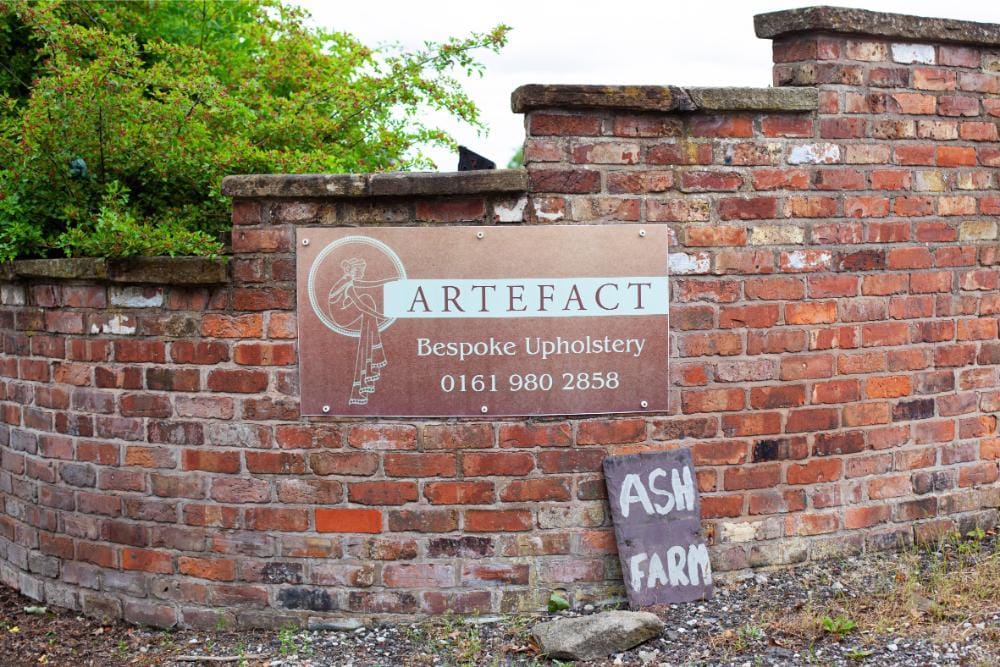
The transition from cellar-based startup to established business happened rapidly. After a year working with a young employee – a friend of her daughter's – Dora's sister offered space on the family farm. What began as hotel work for chains like Copthorne quickly expanded into major projects across the country.
"I was fearless. I had a good team of fitters, and I found myself tenting ceilings and fabric-lining walls in country house hotels."
Those early contracts took Dora far from Altrincham - measuring and fitting in hotels from the Lake District to the South Coast, often working on 20 bedrooms at a time. "It was a lot of driving, a lot of measuring, talking, seeing where you put things, how you use them," she remembers. The work was demanding - 14-hour days were routine - but it established Artefact's reputation for meeting deadlines and delivering quality.
The scope of projects was ambitious: stage curtains reaching four to five metres high, entire restaurant fit-outs, even nightclub features like the melting wax-effect pelmets at Lumiere in London. Dora's willingness to tackle unusual briefs, combined with her team's artistic skills, opened doors to increasingly diverse work.
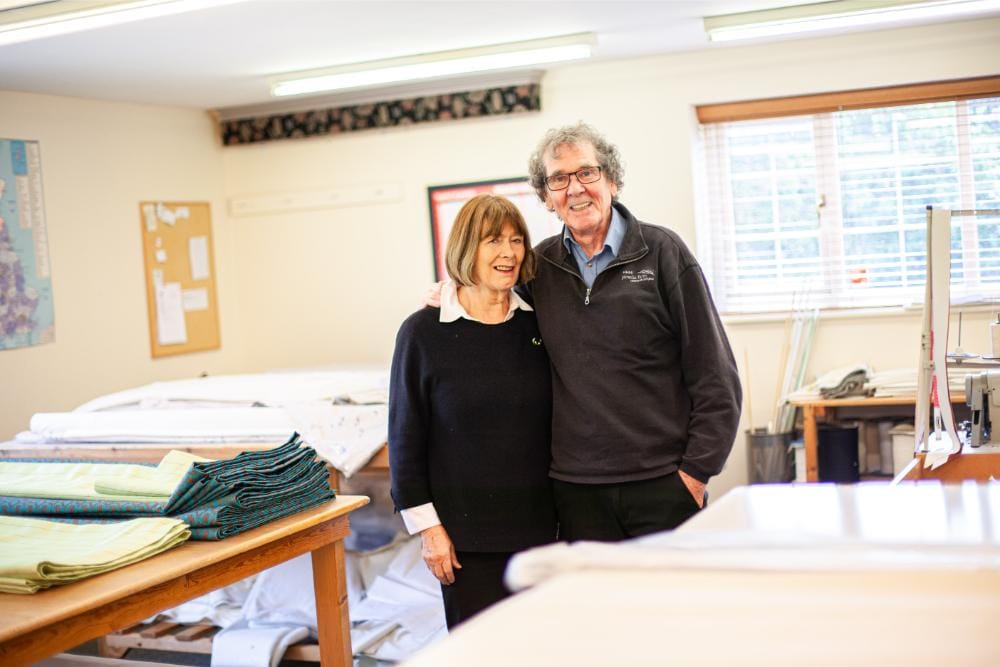
Today, the long-distance hotel contracts have largely ended as Dora's contemporaries in the industry retired, but demand for Artefact's services has never been stronger. "There's no slowing down," she says, explaining how the business weathered both the financial crash and Covid without furloughing staff. "We kept going because you basically have to get down and do it."
The workshop now largely serves clients within a radius of about five miles, focusing on residential work and supporting major local retailers. The clientele includes both direct customers and those reached through interior design partnerships.
"Somebody calls me and I'll go and do an assessment, which generally I'll do for free," Dora explains. "It can be one Roman blind, it can be an entire house."
Her eye for interior design, developed over nearly four decades, allows her to assess spaces quickly. "You just go into a room, you know where things should be, which should stick back, how long this should be, whether you've got the fullness - it's just years of doing it."
She says that current trends lean toward minimalism, though practical concerns like rising electricity bills have renewed interest in interlined curtains for insulation.
The manufacturing process remains largely traditional. Until this spring, Dora personally cut out every piece of fabric - a responsibility she took seriously given that premium materials can cost £100-150 per metre. "Once you cut that fabric, you own it," she explains.
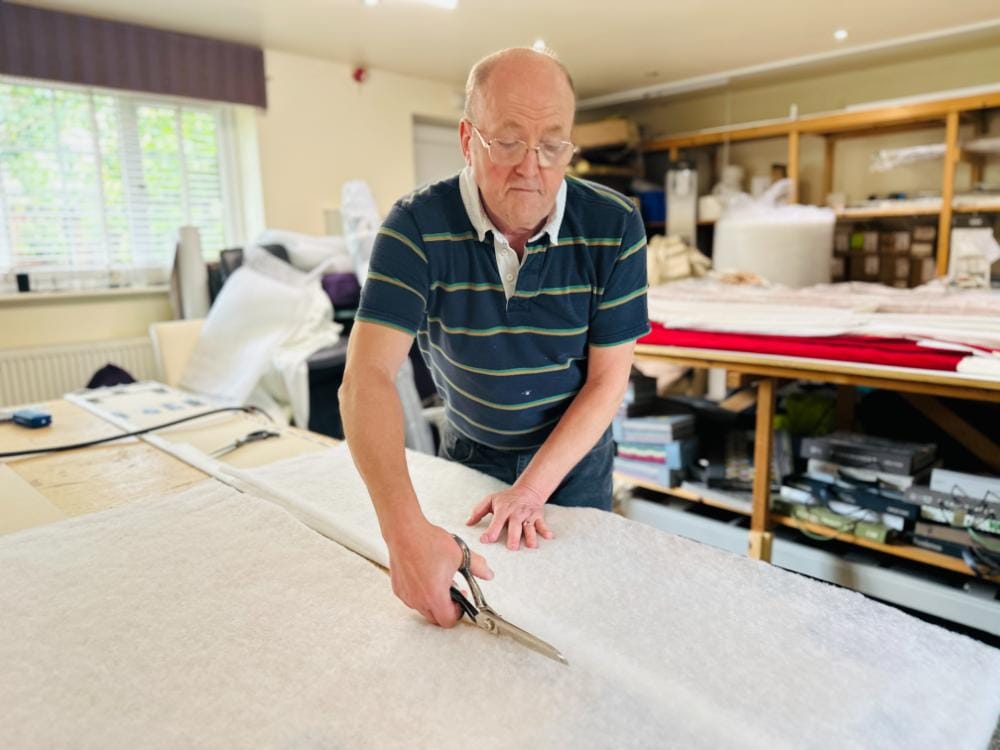
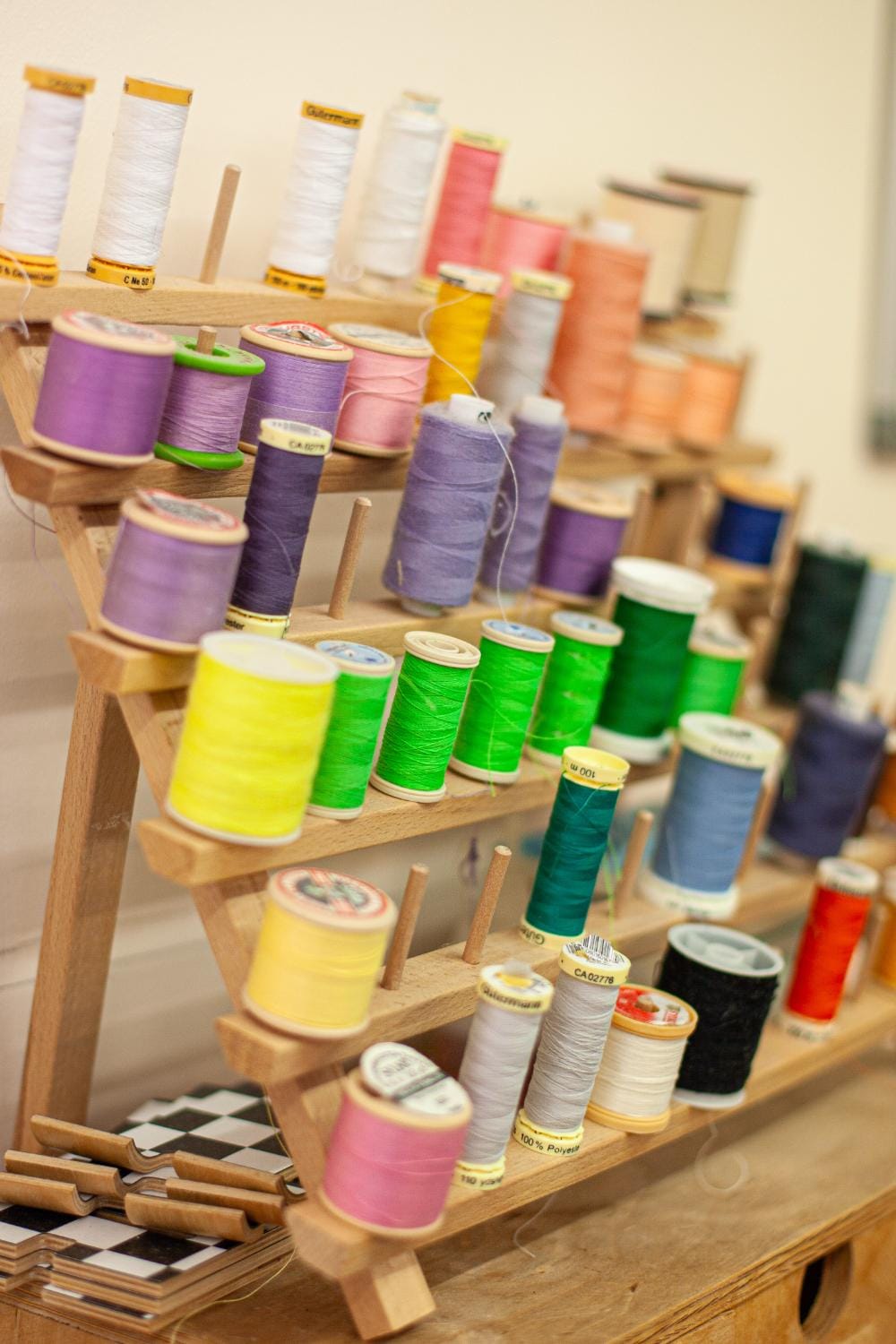
The workshop team of four full-time seamstresses - Jill, Emma, Andrea, and Liz - then hand-sew most pieces, a time-intensive process that reflects changing customer expectations. "Years ago we used to machine-sew but most of what we do nowadays is hand sewn. People want better quality."
Kevin Lowe, the workshop's upholsterer, completes the team that has remained remarkably stable over the decades. "Most of our staff have been with us from the beginning," says Dora.
Maintaining such stability and skill in the future will be a challenge. Traditional sewing education has largely disappeared from schools and adult education, making skilled staff increasingly difficult to find.
"Girls going into sewing – it's just not happening," Dora adds. Yet she sees encouraging signs among younger people "tired of screens" who "want to do something with their hands". A recent talk at Sale Grammar led to a hugely popular class visit to Ash Farm.
Dora's commitment extends beyond the business itself. All fabric offcuts find new life through donations to schools and charitable organisations, supporting everything from educational programs to care packages for developing countries. "Whatever happens, it does not go into landfill," she says firmly.
The workshop's location on Ash Farm, where Dora's sister lives just a few yards away with her nephew David, who runs the 100-acre beef farm, provides both practical advantages and a touch of rural beauty rare in business settings. "We've got space and parking, and I do keep it very clean and smart," Dora adds.
As for retirement plans, Dora remains philosophical: "I think God laughs at your plans. If I have my health, I just keep going." Her approach mirrors advice she recently enjoyed from David Attenborough and Desmond Morris, both in their late 90s, whose secret to longevity was simple: "Stay curious."
After nearly four decades, Dora McGlone continues to represent something increasingly rare – a genuinely local manufacturing business combining traditional skills with modern demands. In an era of global supply chains and online retail, Artefact Fine Furnishings stands as proof that craftsmanship, personal service and deep community roots remain not just viable, but valued.
Artefact Fine Furnishings, Ash Farm, Ash Lane, Hale Barns, WA15 8PJ. For more information, call 0161 980 2858, email enquiries@artefact-interiors.com or visit the website at artefact-interiors.com