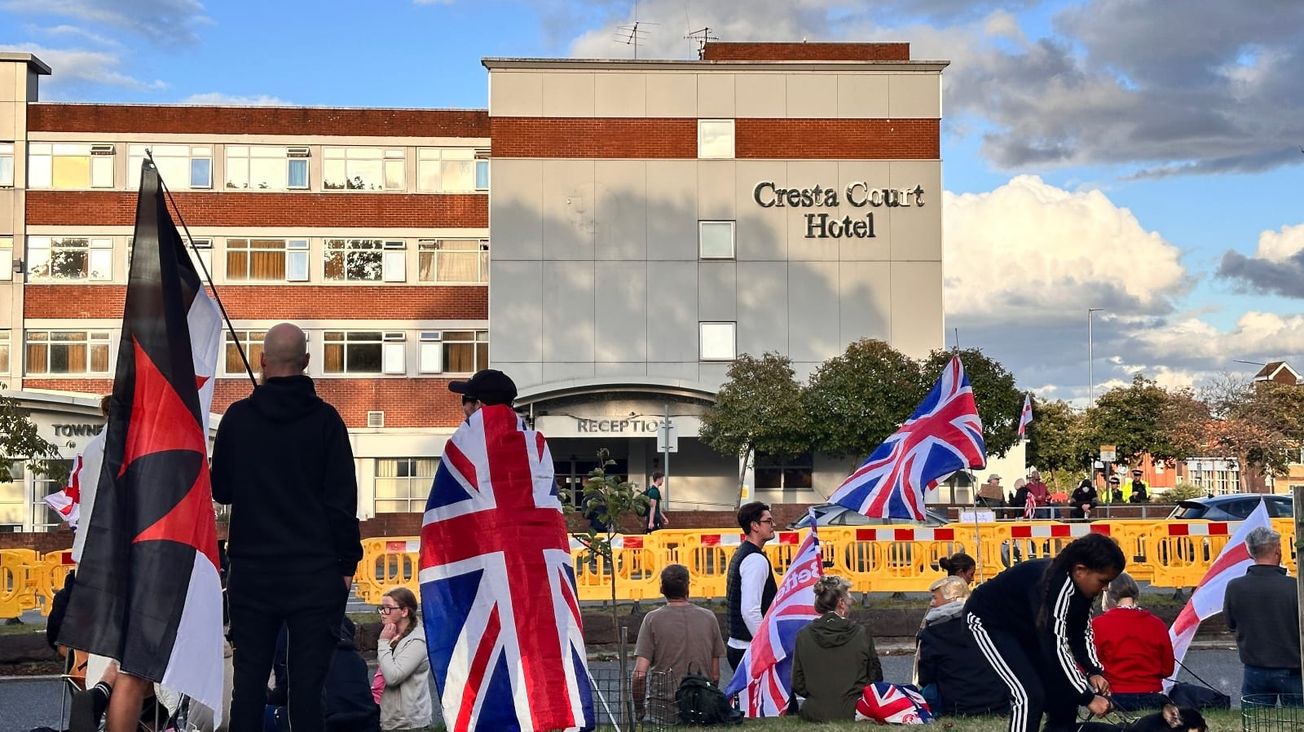
The long-term use of hotels like the Cresta Court in Altrincham to house asylum seekers has been fiercely criticised in a major parliamentary report released today.
The Home Affairs Committee, which includes Altrincham and Sale West MP Connor Rand, condemned the Home Office's "chaotic response" to housing asylum seekers, which has led to disproportionate pressures and mounting community tensions in areas like Trafford.
The report, titled The Home Office's management of asylum accommodation, warns that the Home Office has failed to engage adequately with local communities and authorities, creating a "vacuum" that far-right activists have exploited to increase tensions and promote division.
It specifically notes that the disproportionate distribution of asylum accommodation and the use of highly visible hotel sites have exacerbated community tensions.
The Committee concluded that accommodating asylum seekers in hotels has proven "unpopular with local communities and largely unsuitable for accommodating asylum seekers" and has created a risk of "damaging community cohesion".
Key findings
This week represents a year since the Cresta Court suddenly closed its doors, with all existing bookings and parties cancelled without warning.
The Vine Hotels-owned hotel - which had been a fixture of the town centre's hospitality scene since the 1970s - had agreed a deal with Serco, which manages asylum seeker housing for the Home Office.
Although it was initially closed for a set period of 12 months, the hotel remains closed to the public and - although no official figure has ever been given - is probably holding up to 300 asylum seekers, with two people likely to be sharing each of its 148 rooms.
The site has become a target for regular protests, especially on Friday evenings.

The MPs' report points to a number of reasons as to why local tensions have been allowed to escalate:
- Failure to engage: The report states that the Home Office "has not done enough to engage with local authorities or local communities, undermining trust and the ability of local partners to respond to the placement of asylum seekers in their area".
- Unfair distribution: Contingency Accommodation (hotels) is not factored into the Home Office's plans for the fair distribution of asylum seekers, despite some hotels, like the Cresta Court, being in use for significant periods. This is deemed "unfair on local authorities and unacceptable".
- Pressure on services: The concentration of people in hotels places "unsustainable pressures" on local services, including primary care and social care.
In light of this, the Committee recommends that the Home Office immediately amends its distribution targets to account for the use of Contingency Accommodation and prioritises the closure of hotels that are manifestly unsuitable and causing the most community harm.
It concluded it was "inexplicable that the Home Office has placed no obligation on providers to assess impacts on local areas" prior to accommodation being procured.
Just under 103,000 asylum seekers are currently being housed by the government, of which just over 32,000 are accommodated in 210 hotels like the Cresta.
Spiralling costs
The Committee's wider findings paint a picture of systemic failure and a massive waste of taxpayer money.
- Cost explosion: The expected cost of the contracts for asylum accommodation has more than tripled from £4.5 billion to £15.3 billion since 2019
- Unacceptable delays: The Home Office has neglected the day-to-day management of these multi-billion-pound contracts and has failed to properly recoup excess profits from accommodation providers
- Safeguarding risks: There are "significant safeguarding failings" and an inconsistent response to concerns, including an inadequate system for identifying and appropriately placing vulnerable people, such as children.
The report concludes by urging the Home Office to learn from its mistakes and end the "failed, chaotic and expensive system".
The government must set out a clear, credible and published strategy for delivering a sustainable system that provides greater financial control and "is more locally led but better centrally controlled", with a clear plan to reduce hotel use.
The current asylum accommodation contracts have a break clause that can be activated from March 2026. The Committee recommends the Home Office gives "urgent consideration" to the practical implications of exercising this clause.