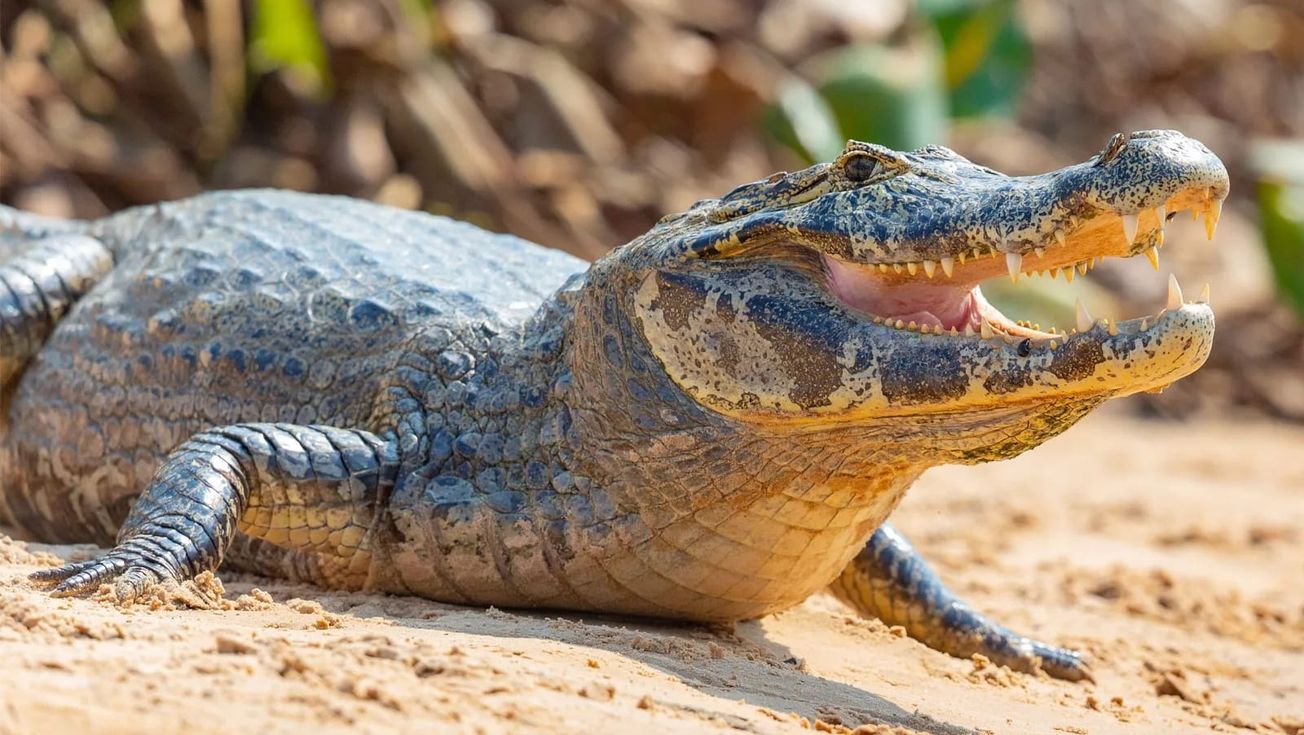
A crocodile has been seized from a semi-detached house in Hale after reports that it was being kept without the required dangerous wild animal licence.
The spectacled caiman – a crocodilian native to Central and South America which can grow to more than two metres long – was removed during a joint operation involving Trafford Council, Greater Manchester Police and the RSPCA yesterday.
The animal, named Lyle, was discovered in an enclosure with water when officers executed a warrant at the property at around 11am on Wednesday.
A python was also removed from the house and taken for assessment by police under the Animal Welfare Act.
Both reptiles were initially taken into the care of a local vet specialising in reptiles, with the caiman due to be transferred to a suitable zoo today.
Spectacled caimans are classified as dangerous wild animals under the Dangerous Wild Animals Act 1976. They have powerful jaws and sharp teeth and can pose a serious biting risk.
Trafford Council said its environmental health team had acted after receiving reports that the animal was being kept without the licence required to privately keep such a species.

Cllr Keleigh Glenton, Trafford Council's Executive Member for Community Safety and Civil Contingencies, said: “Thanks to the work of our environmental health team and partners, the caiman has been carefully removed.
“Species like this require sensitive, expert handling and proper environments and as such we require any owner to hold a Dangerous Wild Animal Licence. We do not hesitate to take decisive action when rules are not adhered to.”
Police Sergeant DeGouveia, GMP's Wildlife Subject Matter Expert, described the operation as “an excellent example of partnership working” and said the coordinated response had ensured the animals were safely secured and removed.
RSPCA Exotic Animals Expert Evie Button said the charity remained concerned about dangerous wild animals being kept privately in Britain.
“We're pleased that both reptiles are now receiving specialist care but we remain deeply concerned that so many dangerous wild animals continue to be kept in private hands across Britain,” she said.
“These animals have highly specialised physical, behavioural and environmental needs that are incredibly difficult to meet in a domestic setting, meaning their welfare can be severely compromised when they are kept as pets.”